
Leaving the American coastline behind, the true challenge of the expedition begins. To bridge the massive gap between the two continents, our flight plan is built on absolute precision and next-generation efficiency. The path we fly is the ultimate test for our hybrid-electric technology.
The Route of Tomorrow: Bridging History and Innovation
In 1927, Charles Lindbergh shook the aviation world by completing the first solo transatlantic flight, navigating 3,600 miles of open ocean based purely on skill, determination, and a vision for the future of flight. Today, as we stand in 2026, the global aviation sector faces a new, defining challenge: the transition to true sustainability.
In 2027, precisely one century after Lindbergh’s historic milestone, Klaus Ohlmann and the E-Flight team will take to the skies to recreate this iconic journey—not just to look back, but to propel aviation forward. Utilizing advanced hybrid-electric propulsion technology, this anniversary flight serves as a living proof of concept for the future of long-range, eco-friendly aviation.
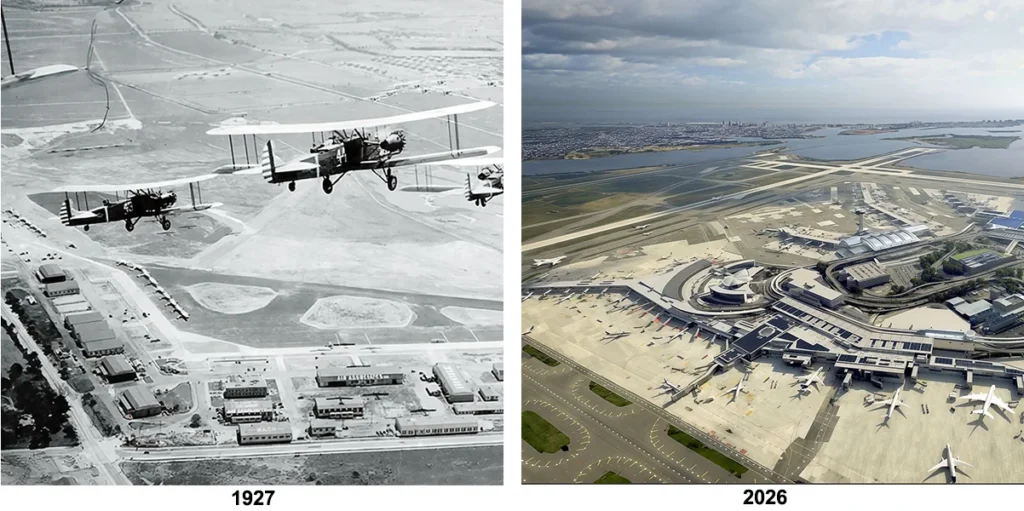
Tracing the Great Circle Route
Our modern expedition begins at the historic western gateway of transatlantic flight: New York. While the infrastructure has evolved into a bustling epicenter of global travel, the physical and aerodynamic challenges of crossing the North Atlantic remain unchanged.
The route will strictly follow the classic “Great Circle Track” across the ocean. Navigating this vast corridor requires meticulous planning, precise energy management of our hybrid-electric Stemme S10 E glider, and an intimate understanding of high-altitude weather systems and atmospheric currents. Every nautical mile flown is a strategic balance between advanced battery management and aerodynamic efficiency.
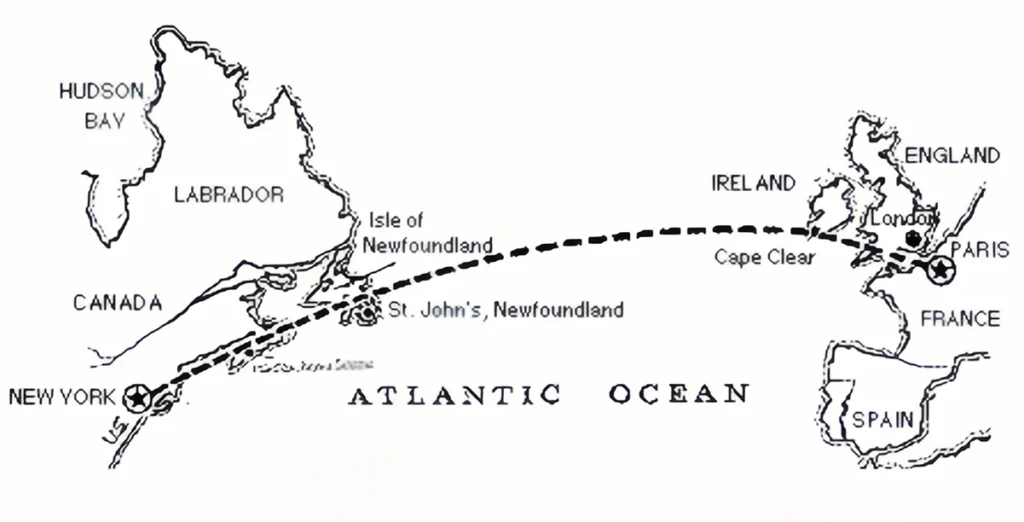
The Destination: A Century of Progress at Le Bourget
Our flight path culminates at Paris-Le Bourget, the exact tarmac where Lindbergh was greeted by an ecstatic crowd of over 150,000 people a century ago. Landing our next-generation hybrid aircraft at this legendary airfield will visually and technologically close the loop on 100 years of aviation history.
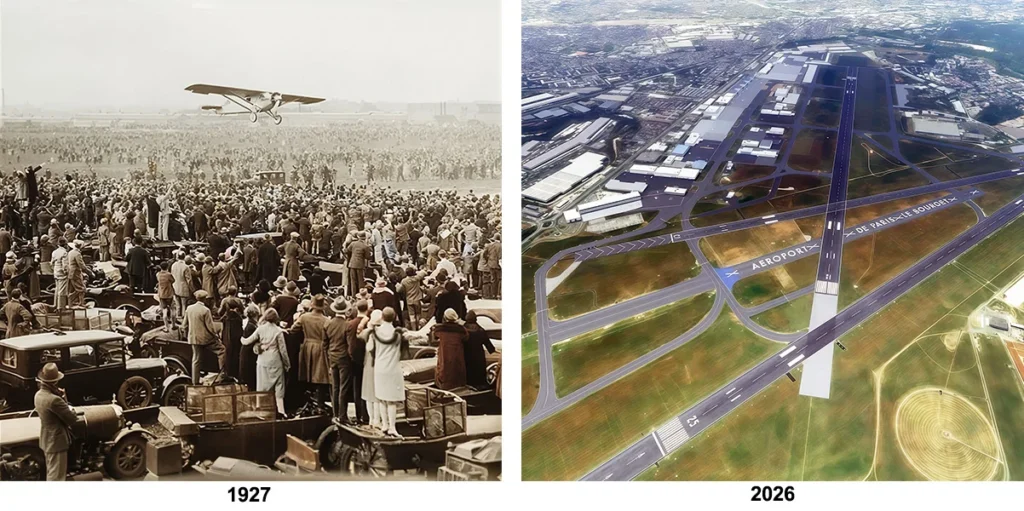
This project is deeply validated by the official interest and support of the Charles & Anne Morrow Lindbergh Foundation. As Erik Lindbergh noted, integrating our pioneering flight into the official centennial programs highlights exactly what his grandfather stood for: pushing the absolute boundaries of what is possible to inspire the next generation. The countdown to 2027 is on, and the future of flight is being written right now.