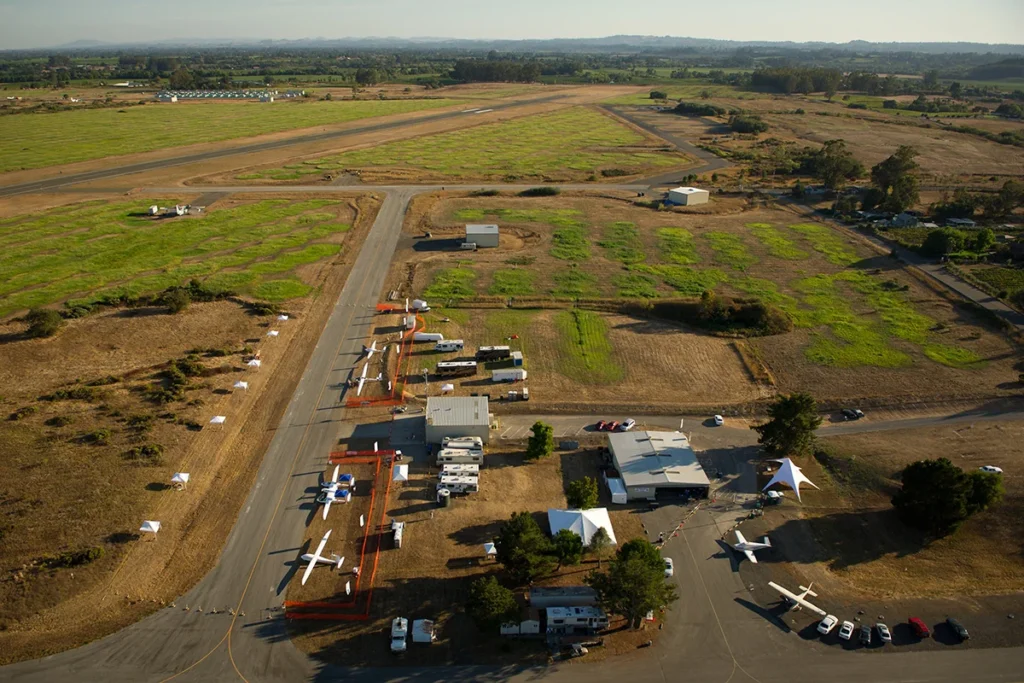
Building on our historic, Google-sponsored NASA eGenius triumph, we are now pushing the boundaries of sustainable aviation toward the ultimate transatlantic challenge: Lindbergh 100.
From Milestone to Mission: The eGenius Saga & The Journey to Lindbergh 100
Modern aviation is facing its greatest transformation since the invention of the jet engine: the transition to sustainable, highly efficient, and emission-free propulsion. While this is discussed as a global necessity today, its technological roots lie in an unprecedented pioneering achievement that made aviation history fifteen years ago. This is the story of eGenius—a visionary team from the University of Stuttgart and an exceptional pilot whose expertise now forms the foundation for the next project of the century.
1. The Birth of a Vision: The eGenius Project
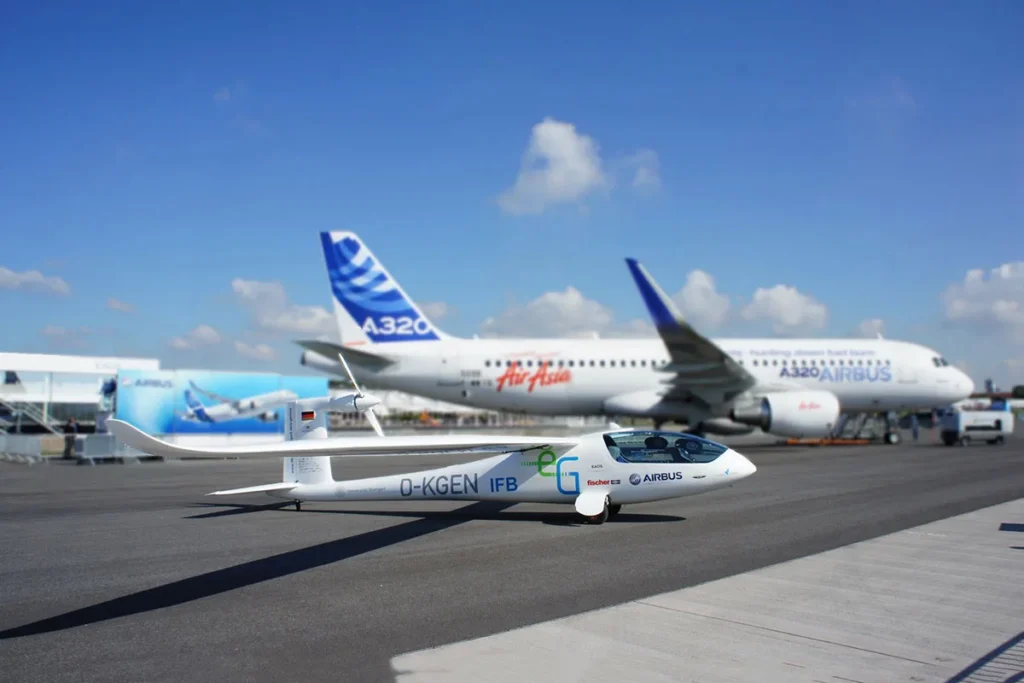
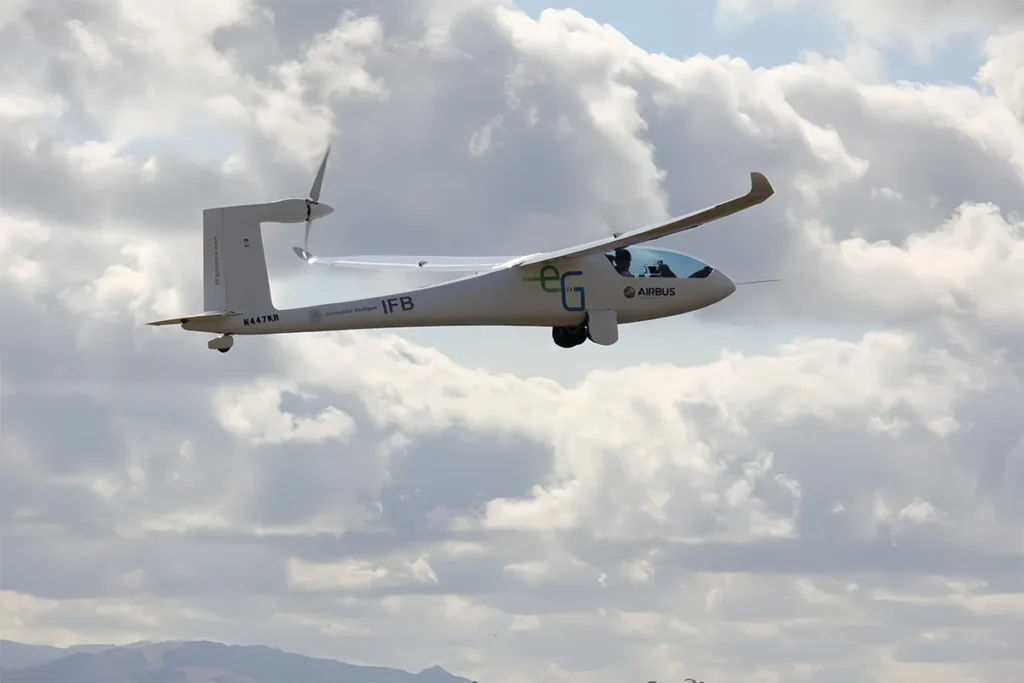
Under the scientific leadership of Prof. Rudolf Voit-Nitschmann at the Institute of Aircraft Design (IFB) at the University of Stuttgart, a radical design emerged in the late 2000s. The goal was nothing less than to prove that a highly advanced, battery-electric aircraft is not only fully operational in the real high-performance segment, but also vastly superior to conventional aircraft in terms of efficiency.
Based on a modified, aerodynamically perfected sailplane airframe, the eGenius was born: a two-seater with rear propulsion, outstanding gliding characteristics (glide ratio 1:50), and a pioneering electric energy management system.
2. The Historic Triumph: NASA Green Flight Challenge 2011
In the late summer of 2011, the US-based CAFE Foundation, on behalf of the aerospace agency NASA and with major sponsorship from Google, announced the highest-endowed aviation efficiency competition in history: the Green Flight Challenge. It demanded a technological quantum leap tied to extremely rigorous criteria.
The Relentless Competition Criteria:
-
Range & Course: A closed circuit of at least 200 miles (approx. 322 km) had to be completed flawlessly.
-
Minimum Speed: The aircraft had to maintain an average speed of over 100 mph (approx. 161 km/h).
-
The Efficiency Threshold: Energy consumption could not exceed the equivalent of one gallon of fuel per passenger for the 200 miles (equivalent to at least 200 Passenger Miles Per Gallon – MPG).
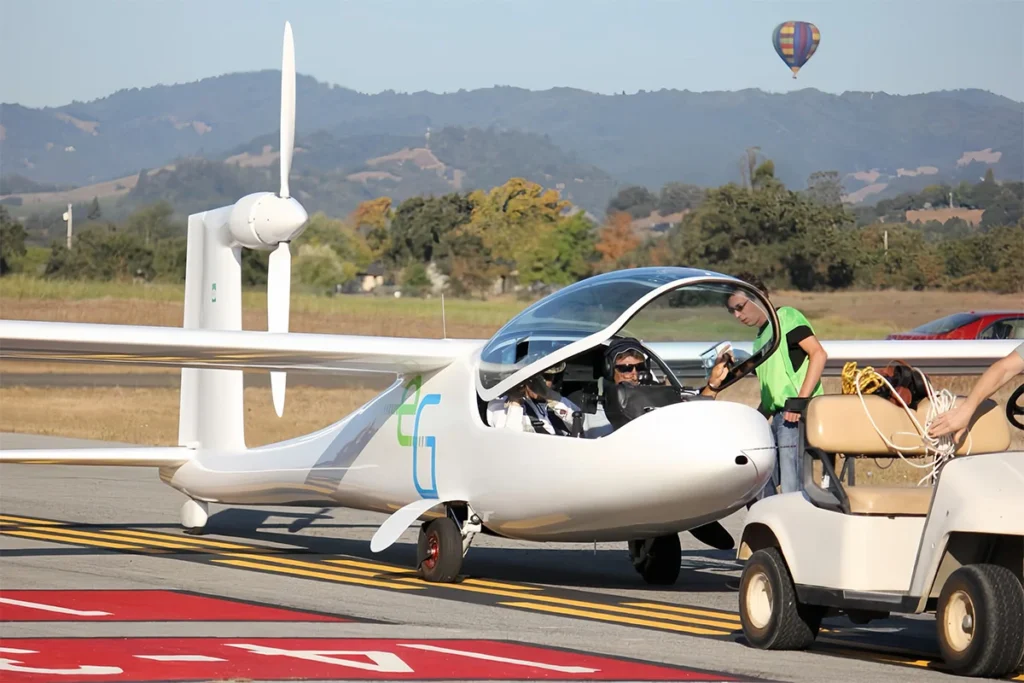
For this historic mission in Santa Rosa, California, the Stuttgart team relied on the cockpit duo of experienced electric flight pioneer Eric Raymond and legendary glider world-record pilot Klaus Ohlmann. It was Ohlmann’s unmatched intuition for aerodynamics, combined with precise tactical energy management, that translated the theoretical potential of the eGenius into real-world peak performance.
SENSATIONAL RESULTS AT A GLANCE:
-
Energy Efficiency: Required: 200.0 MPG — eGenius achieved a phenomenal 375.8 MPG (nearly double the required efficiency!).
-
Average Speed: Required: 100.0 mph — eGenius flew at 107.3 mph (approx. 172.7 km/h).
-
Noise Emission: The eGenius was by far the quietest aircraft in the entire international field of participants.
The Double Success of Santa Rosa: Following a dramatic head-to-head race, the eGenius team secured 2nd place in the overall standings, winning an official NASA prize money of $120,000. Furthermore, due to its revolutionary low noise level, the aircraft was awarded the prestigious Lindbergh Electric Aircraft Prize (LEAP), accompanied by an additional $10,000 in prize money.
3. The Evolution of Records: The 500 km Closed-Circuit Milestone
The success of 2011 was just the beginning. In the following years, Klaus Ohlmann used the eGenius to continually push the boundaries of electric flight. The absolute pinnacle of these flight test series was the presentation of the official FAI Louis Blériot Award.
Klaus Ohlmann completed the fastest flight ever recorded with electric propulsion over a distance of 500 kilometers in a closed circuit. This flight proved once and for all that electric aircraft had left the laboratory prototype stage and matured into genuine long-distance top performers.
4. The Bridge to the Present: The Foundation for “Lindbergh 100”
Fifteen years after the triumph in California, the data, design principles, and cockpit experience gained back then are more valuable than ever. They form the direct technological foundation for our team’s next great historic adventure: the Lindbergh 100 Challenge in May 2027.
To mark the 100th anniversary of Charles Lindbergh’s historic transatlantic flight, Klaus Ohlmann will make history once again. This time in the cockpit of a state-of-the-art, hybrid-electric Stemme S10e. The goal: a historic non-stop flight from New York to Paris—powered by an intelligent hybrid propulsion system whose energy management builds directly on the evolutionary insights of the eGenius era.

What began in 2011 as a visionary experiment with NASA and Google in Santa Rosa, California, will reach its fulfillment over the Atlantic in 2027. We invite partners, sponsors, and aviation enthusiasts to become part of this ongoing success story.