
The Pioneer Spirit: Charles Lindbergh’s Historic 1927 Transatlantic Flight
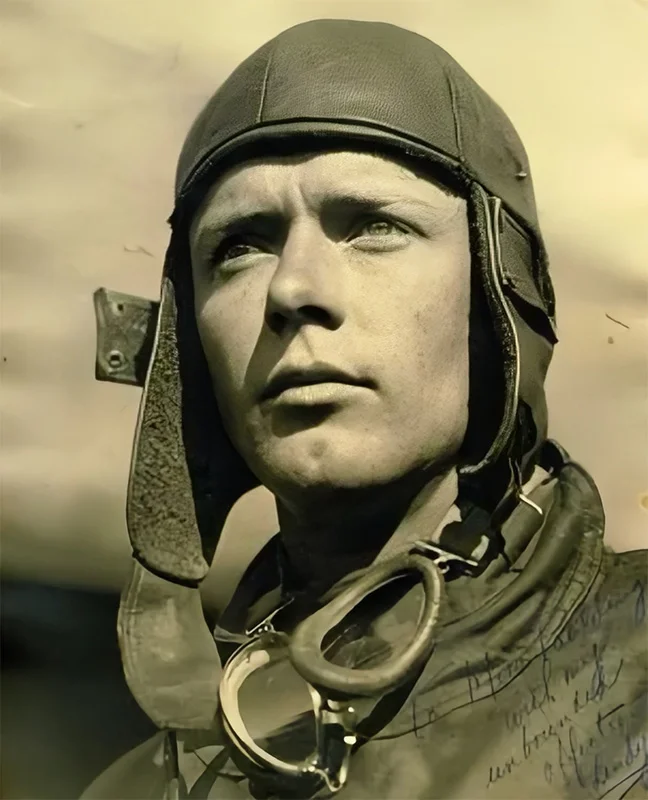
In May 1927, a 25-year-old airmail pilot named Charles A. Lindbergh did what many thought was impossible: he completed the first solo, non-stop transatlantic flight, forever changing the course of aviation history and capturing the imagination of the entire world.
he Challenge: The Orteig Prize
In 1919, New York hotel owner Raymond Orteig offered a *$25,000 prize* to the first aviator to fly non-stop between New York and Paris. For years, the prize went unclaimed. Several famous, highly funded aviation teams attempted the crossing, but their efforts resulted in heavy, multi-engine aircraft crashes, disappearances, and tragic losses of life.
Lindbergh took a completely different, counter-intuitive approach: he chose a single-engine aircraft flown solo, believing that fewer engines and less weight meant a higher chance of success.
The Aircraft: „Spirit of St. Louis“
Designed and built in just 60 days by Ryan Aeronautical Company in San Diego, the Spirit of St. Louis (officially the Ryan NYP) was built for one single purpose: carrying fuel.
The Fuel-First Design: To maximize range, huge fuel tanks were placed in the front of the fuselage, directly ahead of the cockpit.
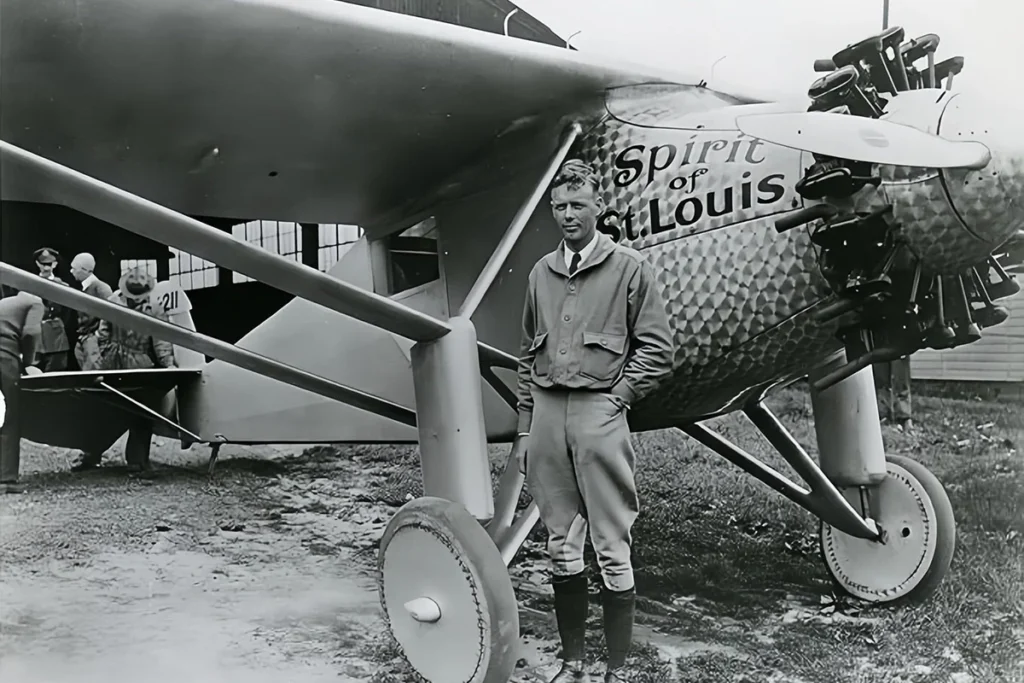
No Forward Vision: Because of the massive fuel tank, Lindbergh had absolutely no direct forward visibility. He had to look out of the side windows or use a small, custom-installed periscope to see what was directly ahead.
Stripped to the Bone: To save every ounce of weight, Lindbergh refused to carry a radio, a fuel gauge, or a parachute. Even his seat was made of lightweight wicker.
The Flight: 33.5 Hours of Endurance
On the rainy morning of *May 20, 1927*, at 7:52 AM, Lindbergh took off from Roosevelt Field, Long Island. The heavily loaded aircraft barely cleared the telephone wires at the end of the runway.
Flight Metric|
Takeoff Date: May 20, 1927 (7:52 AM EST) |
Landing Date: May 21, 1927 (10:22 PM CET) |
Route: Roosevelt Field, New York ➔ Le Bourget Aerodrome, Paris |
Total Distance: ~5,800 kilometers (3,610 miles) |
Total Duration: 33 hours, 30 minutes, 29 seconds
Average Speed: ~173 km/h (108 mph)
The Ultimate Adversary: Extreme Fatigue
Lindbergh’s greatest challenge was not the weather or the mechanics, but sleep deprivation. Having been kept awake by pre-flight preparations the night before, he had to fight hallucinations and profound exhaustion during his 33.5 hours over the Atlantic, navigating entirely by dead reckoning (compass, watch, and ground speed estimates).
The Arrival and Legacy
On the night of *May 21, 1927, Lindbergh touched down at Le Bourget Aerodrome in Paris. An estimated crowd of 150,000 people stormed the airfield in absolute pandemonium, dragging Lindbergh out of the cockpit to celebrate his triumph.

„He flew alone, but he carried the aspirations of all humanity with him.“
Lindbergh proved that long-distance intercontinental flight was a viable reality. Now, 100 years later, the same pioneering spirit drives sustainable aviation—proving once again that with intelligent engineering and courage, the boundaries of flight can be redefined.
