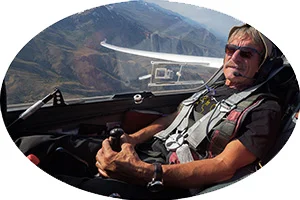
Developed by the University of Stuttgart, the solar-powered aircraft Icaré II is a pioneering milestone in sustainable aviation that showcases the potential of zero-emission flight through advanced lightweight engineering.
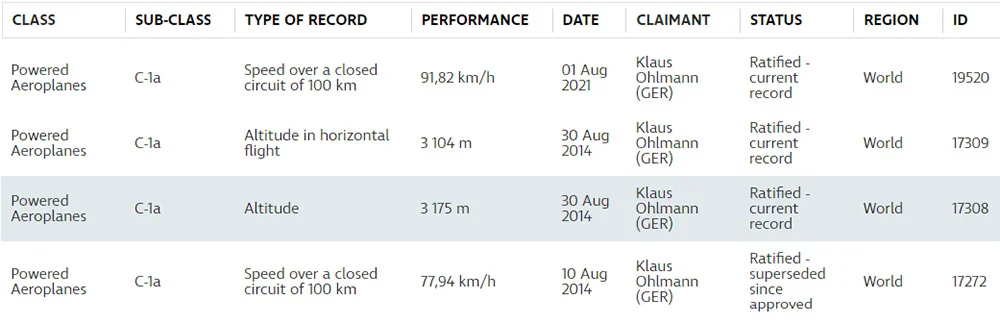
On course for a record with electric power: the Icaré in the FAI Class C-1a
With the battery-powered e-Caré, Klaus Ohlmann has demonstrated that highly efficient aerodynamics and state-of-the-art electric propulsion form the perfect symbiosis. In the official FAI Class C-1a (motorised light aircraft weighing under 500 kg), he has set new global standards for the aviation of tomorrow.”Klaus Ohlmann & Icaré: Shifting the Boundaries of Electric Flight
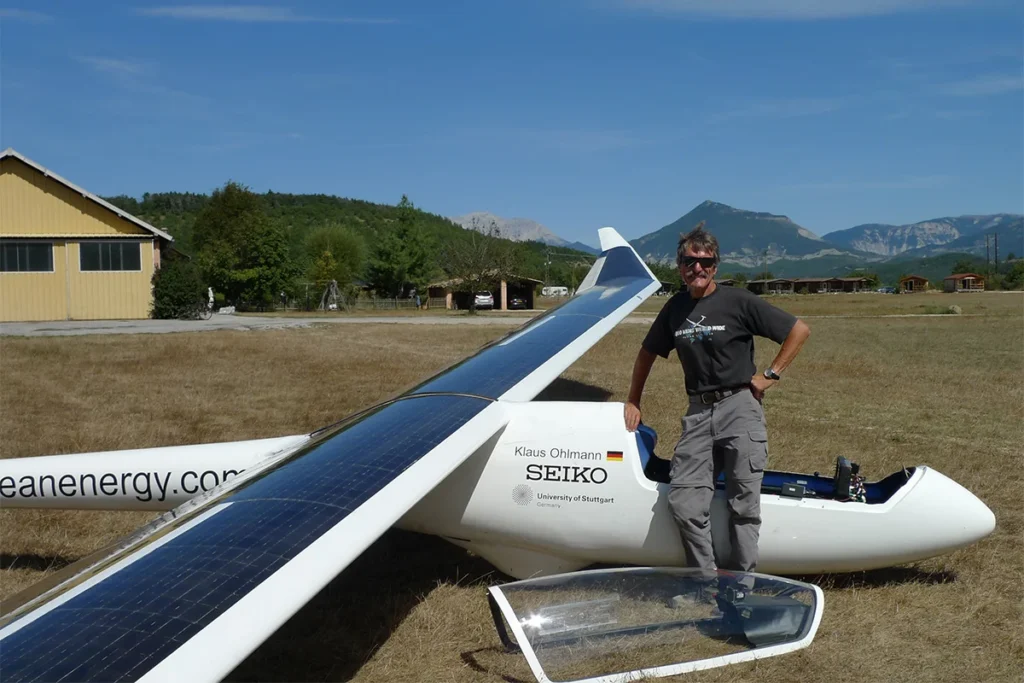
The Visionary Meets the Master Pilot
When the pioneering solar aircraft *Icaré* (developed by the University of Stuttgart) met the world’s most successful glider pilot, *Klaus Ohlmann*, aviation history was rewritten. Originally designed to prove that pure solar flight was possible, Klaus transformed this unique research aircraft into a record-breaking machine, demonstrating the true, high-performance potential of green aviation.
The Historic FAI Class C-1a World Records
In September 2010, utilizing the powerful wave conditions of the French Alps in Serres, Klaus Ohlmann took the controls of the Icaré to push the limits of efficiency.
Flying under the official *FAI Class C-1a* (for motorized aircraft under 500 kg), Klaus executed breathtaking flights that stunned the aviation world:
The Record:
He achieved a sensational free distance flight using up to three turnpoints.
The Feat:
Merging the aircraft’s cutting-edge solar-electric propulsion with his unparalleled tactical understanding of thermal and wave soaring, Klaus proved that clean aviation is not just a theoretical concept—it is a high-performance reality.
Why This Achievement Matters
To this day, Klaus Ohlmann’s flights with the Icaré remain a milestone. The data and insights gained from his record flights directly paved the way for the next generation of electric aircraft, such as the eGenius.
“Klaus Ohlmann didn’t just fly the Icaré; he proved that with the right combination of high-end aerodynamics, electric propulsion, and master piloting, the sky is no longer the limit for sustainable aviation.”
Records
Technische Daten: Icaré II
Spannweite: 25,0 m
Flügelfläche: 25,7 m²
Länge: 7,9 m
Höhe: 2,0 m
Leergewicht: ca. 300 kg (inkl. CFK-Leichtbau)
Max. Abfluggewicht (MTOW) 390 kg
Flächenbelastung: ca. 15 kg/m²
Beste Gleitzahl: 36
Min. Fluggeschwindigkeit: 48 km/h
Max. Fluggeschwindigkeit: 90 km/h
Antrieb und Energiesystem
Max. Motorleistung: 12 kW
Solarzellen-Fläche: Über 20 m² (Flügeloberseite)
Max. Solar-Leistung: 3,6 kW
Akku-Kapazität: 2,9 kWh (Lithium-Polymer)
Akku-Gewicht: 27 kg
Mittlere Spannung: 135 V
Max. Steiggeschwindigkeit: 2,0 m/s